
Poor Electricity, Nigerians Turn to Solar as a Reliable Alternative
Bala Danjuma, a real estate manager, burns about 6,000 litres of diesel monthly, costing hundreds of thousands of Naira, just to power his generators. No thanks to the poor electricity supply in Abuja. However, solar panels, lithium batteries, and inverters are helping real estate managers like Danjuma to access cleaner energy at a low cost.
By The Context · September 27, 2026
As Nigeria grapples with unreliable power supply, property owners in the real estate sector are turning their attention to solar energy as a cleaner, more efficient, and dependable alternative.
In Abuja, property managers and business owners facing skyrocketing diesel costs are now investing millions in solar energy solutions to help reduce expenses and navigate the rising cost of living in the country.
With electricity from the national grid often unavailable, Nigerians have long relied on diesel-powered generators to fill the gap.
However, with growing oil prices and shrinking purchasing power, many are now shifting to a more sustainable and cost-effective option: solar energy.
Bala Danjuma, a real estate manager in Abuja, explains how solar has become a game-changer for his properties, helping them slash energy costs. “So what we feel about the solar, I'm just happy now, because before the installation of the solar we have a lot of challenges.
The challenge we had was diesel; every month we are using 5,000 to 6,000 litres,” Danjuma laments.
The real estate manager said with the installation of solar panels and inverters, the cost of energy they consume has reduced significantly.
“With the installation of this solar now, every month, we are using only 1,000 litres of diesel.”
According to Statista, Nigeria's solar energy capacity stood at 112 Megawatts in 2023, ranking the country 8th in Africa for renewable energy production.
However, as demand for solar solutions grows, industry players say clients are struggling to meet financial commitments due to Nigeria's harsh economic realities.
“The biggest challenge is that we are dealing with premium quality products, so there are a lot of people that once we give them the breakdown of solar installation, they just run away, you understand, because of the cost,” says Adamu Faguji, an Abuja-based renewable energy engineer.
Speaking on the need for affordable solar installation services, the energy expert recommends consumer credits and loan packages, urging banks to intervene.
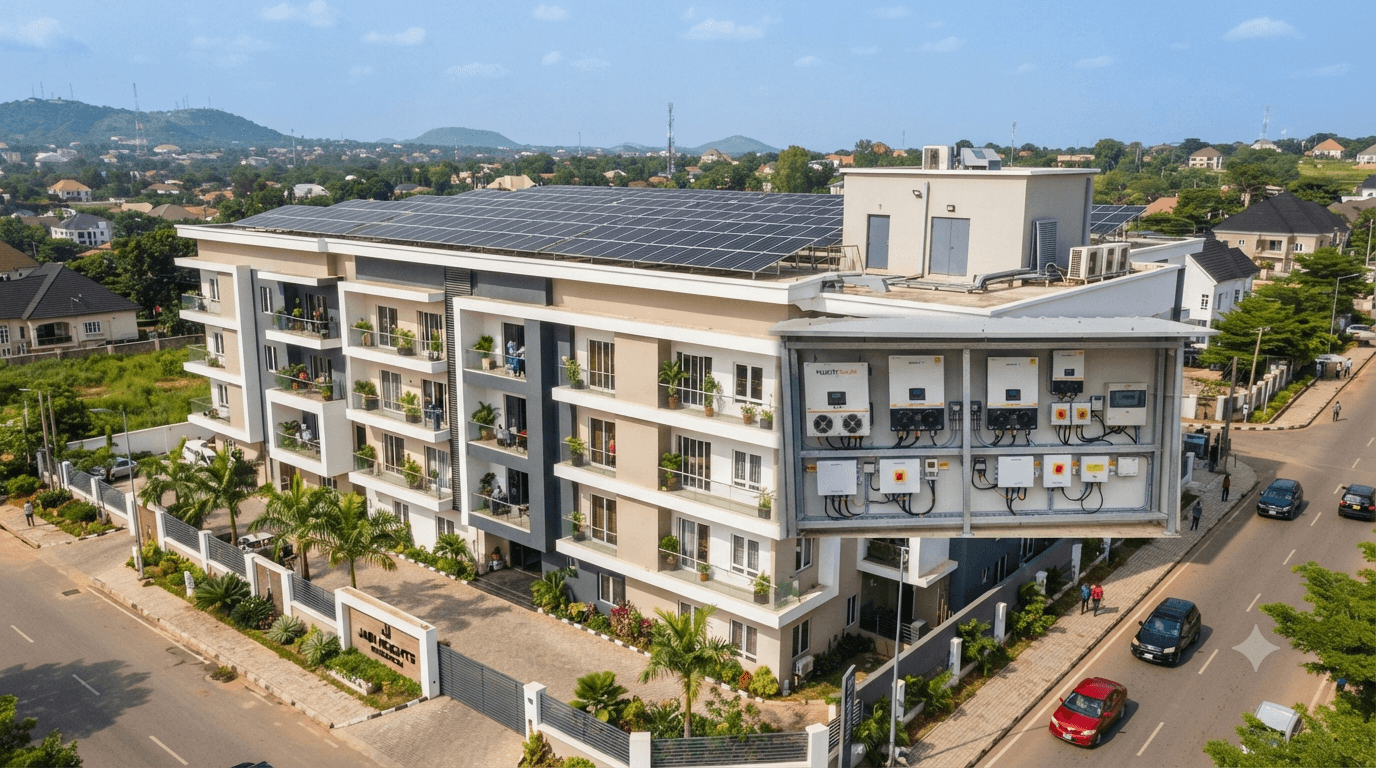
To understand the scale of adoption of solar panels in Nigeria's real estate sector, we visited a housing estate that relies heavily on solar panels and inverters as its main source of energy.
The housing estate, consisting of over 32 apartments, is located in the Jabi area of Abuja, Nigeria's capital.
The solar panels and inverters generate over 100 kilowatts of electricity for the estate, helping residents to save costs.
In 2024 alone, Nigeria’s national electricity grid recorded 11 collapses; this power failure is affecting businesses and residents.
Amidst the rising cost of electricity, many Nigerians want to switch to solar energy. However, some respondents complained that solar panels are becoming expensive, raising affordability concerns.
“I'm planning to have one also, because of financial problems, I can't get it for now, but by special grace of God I'm planning to get it,” says Musa Shuaibu, an Abuja resident.
But for Chukudi Victor, the cost of maintenance for the solar panels, inverters, and batteries is a major impediment blocking him and many Nigerians from acquiring solar power generators.
“As we all know, solar energy is very expensive, so it's something that one needs to be grounded financially before you can acquire one, because it's not only acquiring it, but the cost of maintenance is another thing entirely,” Chukudi explained.
But beyond financial limitations, experts believe that Nigeria has vast untapped potential for solar energy. If fully harnessed, it could transform the nation's energy landscape and unlock economic opportunities.